
Milton, GA & North Fulton
Tax Reduction Strategies for Business Owners in Milton, GA
The typical Milton owner lives on three acres off Freemanville Road and runs a company somewhere else. The custom building firm works the estates along Birmingham Highway. The engineering practice is in Alpharetta. The four franchise locations are spread across North Fulton and Cherokee County. The home and the land are the visible part of the wealth. The business is the larger part, and its tax structure is usually the one that was set up when the company was a third of its current size.
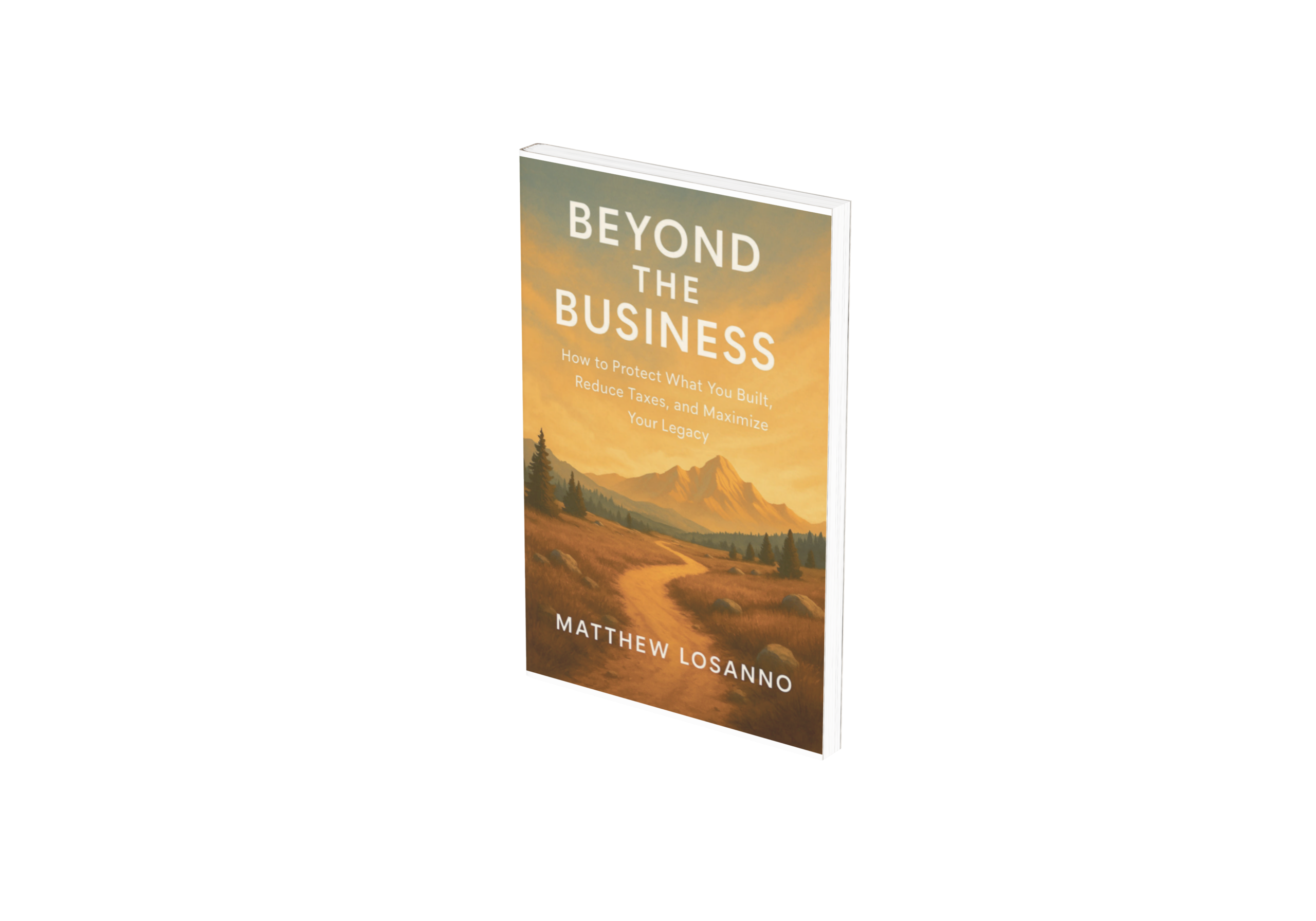
Cinder Wealth is based in Cumming, a short drive north of Milton up Highway 9, and works with profitable business owners throughout Milton and North Fulton. Matt Losanno focuses on the decisions that change an owner’s tax picture by a meaningful amount: entity structure, how the owner is paid, retirement plan design, real estate held personally or through the business, charitable giving, and the eventual sale. Cinder does not prepare returns. Matt works out what each choice does to the household and brings it to the owner’s CPA and attorney while there is still time to act on it.
The Milton Business Picture
The income lives in Milton. The business usually does not.
Milton has 6,707 households earning $200,000 or more, which is close to half the households in the city, and a median home value of $789,000. Less than two percent of the city’s land is zoned for commercial use, concentrated in Crabapple, Deerfield, and Birmingham Crossroads. So the companies that produce that income are mostly located elsewhere: professional firms along GA-400, contractors and landscape companies that serve the estate properties, franchise groups across North Fulton and Cherokee, and technology companies whose founders chose Milton for the schools and the space.
That separation between where the owner lives and where the money is made shapes the planning. A strong year in the business changes reasonable compensation, retirement plan capacity, the case for owning the company’s building, and how much of the family’s net worth is tied up between one company and one large property. Each of those decisions moves the others, and handled one at a time they rarely produce the result the owner intended.
6,707
Milton households with income of $200,000 or more, U.S. Census Bureau
$171,295
Median household income in Milton, 2020 through 2024, U.S. Census Bureau
Under 2%
Share of Milton’s land zoned for commercial use, City of Milton
Local
Cinder Wealth is based in Cumming and works with owners across North Fulton
Who Matt Works With
Milton owners whose tax picture has outgrown an annual filing
Cinder Wealth’s clients typically own companies producing $500,000 or more in annual profit. An owner nearer $300,000 whose profit is climbing quickly, or who has a sale or buyout already on the calendar, is often a fit as well.
The review is worth the owner’s time when the tax bill, the cash in the company, the property, the personal portfolio, and the exit date have started to interact and nobody on the current team is responsible for all five.

Custom Builders and Estate Service Companies
Builders, landscape and hardscape firms, pool contractors, and equestrian service businesses working the large-lot properties along Birmingham Highway, Hopewell Road, and Freemanville Road, with equipment, crews, and profit that swings with each project.
Professional Firm Principals Who Live in Milton
Attorneys, engineers, consultants, and advisory firm owners whose practice is in Alpharetta or along GA-400 and whose household, property, and estate plan are in Milton, where the two halves are rarely planned together.
Founders Who Left a Corporate Role
Executives who left a large employer, still hold its stock or a deferred compensation balance, and now run a company of their own, with two sets of tax consequences that have never been looked at side by side.
Multi-Location Franchise Operators
Owners running units across North Fulton, Cherokee, and Cumming through several entities, with family members on payroll and a new opening every year or two that changes the tax picture each time.
Owners Holding Significant Land
Families whose net worth includes acreage that has appreciated for decades, where a future sale, a conservation decision, or a transfer to children carries tax consequences that need to be planned alongside the business.
Tax Planning Areas
What Matt reviews with Milton business owners
Planning Calendar
Working on the Open Year, Not the Closed One
A tax return is a record of decisions already made. Matt works on the ones still ahead: this year’s expected profit, the estimated payments, a truck or a building purchase, retirement plan funding, and any change in ownership, laid out early enough for the CPA to shape the outcome instead of reporting it.
Entity Structure
Whether the Original Setup Still Fits
A company formed as a single-member LLC may now be overpaying self-employment tax, and one that elected S status years ago may have grown into a situation the election no longer suits. Matt shows the owner what each structure does to the household. The CPA and attorney decide what is available and handle the paperwork.
Real Estate
The Shop, the Office, and the Acreage
Milton owners often hold a commercial building for the business and a large residential property at home. Whether the business should own or rent its space, how rent between entities is set, how depreciation is taken, and what a future sale of either property means for the family are all tax questions. Matt models them together. The CPA confirms the treatment.
Georgia Planning
The Pass-Through Entity Election
Georgia lets eligible S corporations and partnerships choose each year to pay state income tax at the entity level. It helps some Milton owners and not others, and it changes estimated payments and reporting either way. Matt gets the question in front of the CPA before the deadline. The CPA determines eligibility and files.
Retirement Plans
From a Basic 401(k) to a Cash Balance Plan
The plan a company sponsors decides how much the owner can put away, what the staff receives, and how much cash leaves the business each year. For a steadily profitable company whose owners are older than most of the crew, a cash balance plan on top of the 401(k) can raise deductible contributions substantially, with actuarial and funding obligations that continue for years. Matt models it with a plan professional and the CPA before adoption.
Owner Compensation
Salary, Distributions, and Who Else Is on Payroll
Salary set at the S election, distributions taken when cash is available, a retirement contribution decided in December, and a spouse on payroll add up to a compensation structure nobody designed. Matt reviews it as one system and shows what changing it does to the household. The CPA and attorney confirm what the rules require.
Personal Wealth
Former Employer Stock and Charitable Giving
Shares that vested at a former employer, gains in a brokerage account, and a company that represents most of the family’s net worth all create exposure outside the business. A household that gives regularly may do better giving appreciated stock or using a donor-advised fund than writing checks. The CPA confirms the treatment first. All investing involves risk, including the possible loss of principal.
Liquidity Events
A Company Sale or a Land Sale, Planned in Advance
The after-tax result of selling a business, taking on a partner, or selling acreage depends on how the transaction is structured, and most of the options close once an agreement is signed. Matt gets the owner’s cash-flow and investment plan in front of the CPA, the attorney, and the valuation professional while the structure is still open.
Why Coordination Matters
A lower tax bill is only a win if the rest of the plan still works
Plenty of strategies reduce this year’s tax and cost the family more over time: they pull cash the company needs, commit the owner to years of funding, or add a structure a buyer will discount.
The CPA stays responsible for tax
Matt does not replace the CPA and does not give tax advice. He supplies what the CPA usually does not have: how the tax decision connects to the retirement plan, the portfolio, the property, the cash in the business, the estate documents, and the exit timeline. The CPA then decides with all of that in view.
Most of the net worth is in two illiquid assets
For many Milton households the company and the property are most of the balance sheet. A choice made inside the business changes how much cash the family can reach, how much risk it carries, and when retirement becomes realistic. There is no such thing as a purely business decision at that point.
The calendar decides what is possible
A few moves can be made in the last week of December. Adopting a plan, making an election, closing on a building, getting a valuation, and structuring a sale each need months. The review identifies what carries a date and who owns the task.
Cost and upkeep count against the saving
A pension plan, another entity, a trust, or a charitable vehicle each carries a setup cost, an annual cost, a cash requirement, and a minimum life. The expected saving has to clear all of that, or the owner is better off doing nothing.
Based in Cumming
A local advisor for Milton business owners
Cinder Wealth Advisors is based in Cumming, a short drive north of Milton up Highway 9, and works with business owners across Milton, Alpharetta, Roswell, Canton, and the rest of North Fulton. Matt Losanno started the firm after watching owner after owner rely on a good CPA, a good attorney, and a good broker who never spoke to each other.
That is the service: deciding which questions matter this year, building the financial analysis, and getting it to the professionals who handle the filings and the documents while it can still change the outcome. The relationship usually starts with a tax strategy review of the business as it is now, the plan already in place, and the decisions coming up.
Cinder Wealth is a fee-based advisory firm. Advisors may earn commissions on some insurance products.

Common Questions
Tax planning questions from Milton business owners
Straight answers about what Cinder does, what stays with the CPA, and when a review is worth scheduling.
Does Cinder Wealth do my taxes?
No. Preparation, calculations, and filing stay with your CPA. Matt identifies the planning questions, works out what each one does to the family’s finances, and gives the CPA a clear picture early enough to use it.
My CPA is in Alpharetta and has handled everything for years. What would change?
Nothing about the CPA’s role. What changes is that someone is looking at how a tax decision affects the cash in the business, the retirement plan, the property, the portfolio, the estate plan, and the eventual sale, and putting that in front of both the CPA and the owner before the decision is made.
My business is in Alpharetta but I live in Milton. Does location matter for planning?
For the plan, what matters is that the household and the company are treated as one picture. Where each sits affects property tax, the case for owning the business’s building, and how a future sale of either the company or the home is handled. Matt works with owners across North Fulton regardless of where the office is.
Should my company own the building it operates from?
That depends on the household’s overall plan, not just the deduction. Where the property is held, how rent is set between entities, how depreciation is taken, and what happens to the building when the company is sold all change the answer. Matt models the versions. The CPA and attorney confirm the structure and the tax treatment.
Should my Georgia business make the pass-through entity election?
Your CPA has to answer that for your situation. The election lets an eligible S corporation or partnership pay Georgia income tax at the entity level, and whether it helps depends on the owners, any income earned in other states, estimated payments, and each owner’s individual return. Matt’s role is to make sure it is considered in time and the CPA has the figures.
We own acreage that has appreciated a lot. Is that part of tax planning?
Yes. A future sale, a conservation decision, subdividing, or transferring land to children each carries its own tax consequences, and they interact with the business and the estate plan. Matt keeps the property in the model. The CPA and attorney advise on the treatment of any specific transaction.
When in the year should a Milton owner start?
While the year is open and before the large decisions are signed. A sale, a partner buy-in, an entity election, a property purchase, a retirement plan change, or a significant gift each needs more lead time than December allows.
What size company does Cinder Wealth work with?
Most clients own businesses with roughly $500,000 or more in annual profit. Owners around $300,000 with profit rising quickly, or with a transaction approaching, are often a fit. The tax strategy review is how both sides learn whether there is enough planning work to justify going further.
Talk to Matt
Review the tax decisions still open this year
If your company is producing meaningful profit and the tax decisions have become hard to coordinate across the business, the property, and the household, start with the free tax assessment or schedule a review with Matt.
Related Pages
The information presented on this page is for educational purposes only and does not constitute personalized financial, tax, or legal advice. Cinder Wealth is not a licensed tax professional. All strategies discussed should be evaluated with your own CPA, attorney, and qualified financial advisor before implementation. All investing involves risk, including the possible loss of principal. Investment Advisory Services are offered through Csenge Advisory Group, LLC, a registered investment advisor. Cinder Wealth Advisors is not affiliated with Csenge Advisory Group, LLC.