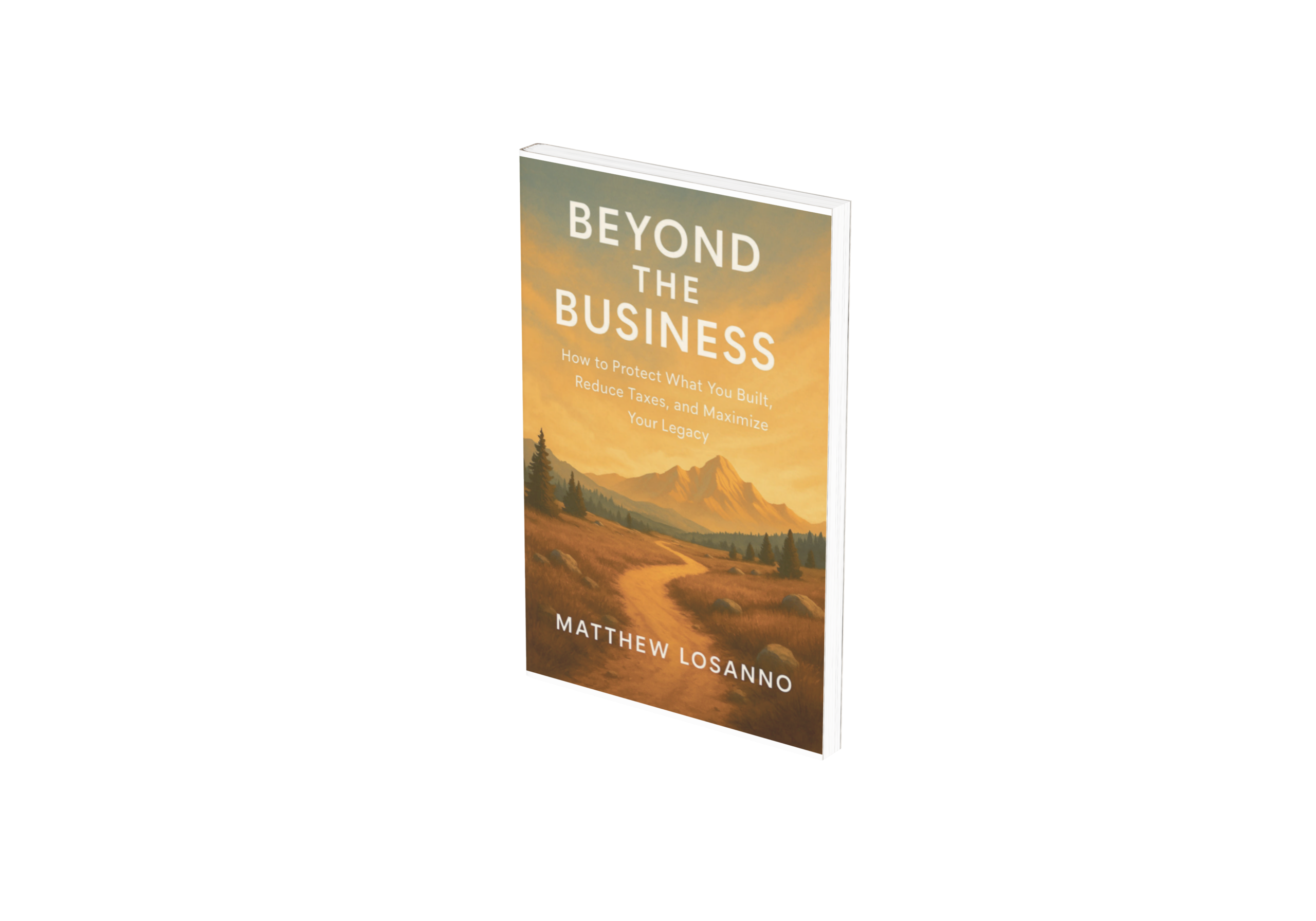

Alpharetta, GA & North Fulton
Business Succession Planning in Alpharetta, GA
Succession is the version of an exit where the buyer is someone the owner already knows. A daughter who has run operations for six years. Two partners who want the founder’s shares. A general manager who has earned the business but cannot write a check for it. The price still has to be set, the taxes still apply, and the money still has to fund someone’s retirement. What changes is that everyone at the table will still be in each other’s lives afterward.
Cinder Wealth is based in Cumming, a short drive up GA-400, and works with owners across Alpharetta and North Fulton on internal transitions. Matt Losanno works on the financial side: whether the departing owner can afford the terms being discussed, whether the successor can actually fund the purchase, how the payments are structured, and what happens if the transition takes longer than planned. He does not draft the legal documents or value the company. He builds the plan and coordinates the CPA, the attorney, and the valuation firm around it.
The Alpharetta Succession Picture
The hardest transfers are the ones where everyone stays in the room.
Alpharetta has 2,042 residents running their own incorporated businesses, and a large share of them are past the stage where the company is a startup. Professional firms along Windward Parkway, specialty contractors serving the Avalon and Northwinds projects, medical and dental practices, and second-generation family companies all reach the same point eventually: the owner wants out, and the obvious buyer is already inside the building.
Internal transitions fail for financial reasons more often than personal ones. The successor cannot fund the purchase. The seller note is sized for a good year and the company has an average one. The departing owner discovers the payments do not cover retirement. Each of those is knowable in advance, which is the whole reason to do the work early.
2,042
Alpharetta residents self-employed in their own incorporated business, U.S. Census Bureau
$147,612
Median household income in Alpharetta, 2020 through 2024, U.S. Census Bureau
66,855
Alpharetta population, 2020 through 2024, U.S. Census Bureau
Local
Cinder Wealth is based in Cumming and works with owners across North Fulton
Who Matt Works With
Alpharetta owners whose buyer is already on the payroll
Cinder Wealth typically works with owners whose companies generate $500,000 or more in annual profit. Succession work is most useful three to five years out, when there is time to prepare the successor, structure the funding, and let the departing owner test whether the numbers actually support leaving.
The common situation is an owner who knows who should take over and has not yet worked out whether the transfer can be paid for.

Family Businesses Moving to the Next Generation
Owners transferring to a child who works in the business, usually with other children who do not, where fairness and equality are not the same thing and the difference has to be planned for.
Professional Firms With a Partner Track
Attorneys, consultants, accountants, and advisory firms where partners buy in over time and the founder’s shares have grown larger than any incoming partner can finance.
Owners Selling to a Key Employee
Founders transferring to a general manager or long-tenured operator who has earned the business but has no capital, where structure and funding decide whether it happens.
Medical and Dental Practices
Practice owners bringing in an associate or partner, coordinating buy-in terms, compensation, and the timing of the founder’s step-back from clinical work.
Multi-Owner Companies Without an Agreement
Businesses with two or three owners and either no buy-sell agreement or one written years ago at a value nobody would accept today.
Succession Planning Areas
What Matt works through with Alpharetta owners
The Seller’s Side
Can the Owner Actually Afford to Leave
Before terms are discussed, the departing owner needs to know what the transition has to produce. Matt models retirement income against the proposed payment schedule, including what happens if payments slow. Owners regularly discover that the terms they were prepared to offer do not fund the life they described.
The Buyer’s Side
How the Successor Funds the Purchase
A key employee or a child rarely has the capital to buy outright. The purchase gets funded through some mix of seller financing, bank or SBA debt, earnings over time, or a gradual transfer of shares. Each puts the risk in a different place. Matt models the versions so both parties can see who is carrying what.
Valuation
Setting a Price Two Parties Can Live With
Internal transfers still need a defensible value, both for the relationship and for the tax treatment of a transfer to family. Cinder does not perform valuations. Matt coordinates the valuation firm and makes sure the resulting number is tested against what the buyer can finance and what the seller needs.
Buy-Sell Agreements
The Document Most Companies Have Outdated
A buy-sell agreement governs what happens on death, disability, departure, and dispute. Many were written at formation and never revisited, which means they carry a value nobody would honor and a funding mechanism nobody has checked. The attorney drafts it. Matt reviews whether the funding behind it still exists.
Funding the Agreement
Insurance, Reserves, and What Happens on a Bad Day
An agreement that requires the company to buy out a deceased owner’s shares is only as good as the money behind it. Life and disability coverage are the usual mechanism, and the amounts often have not been updated as the company grew. Cinder Wealth is a fee-based firm and advisors may earn commissions on some insurance products.
Family Fairness
Equal Is Not Always the Same as Fair
When one child runs the business and others do not, splitting the company equally usually damages both the business and the family. Other assets, life insurance, and structured buyouts are the common tools. Cinder does not draft legal documents. Matt works with the estate attorney so the financial plan matches the intent.
The Handover
Preparing the Successor and the Timeline
Ownership and management do not have to transfer at the same time, and usually should not. Customer relationships, banking, bonding, key vendors, and decision authority each need their own handoff. Matt helps sequence them so the company’s value survives the founder’s exit.
Taxes and Estate
Gifts, Basis, and Coordination With the CPA
Transfers to family involve gift considerations, valuation discounts, basis questions, and sometimes trusts, and the answers differ substantially from a third-party sale. The CPA and estate attorney determine treatment and prepare the filings. Matt makes sure the questions reach them before the transfer rather than after.
Why Internal Transfers Are Harder
The relationship survives the transaction, which changes every term
In an outside sale the parties never have to speak again. In a succession the buyer is a partner, an employee, or a child, and every term negotiated becomes something they live with for years.
The buyer usually cannot pay cash
Which means the seller finances part of it and stays exposed to the company’s performance after giving up control of it. Sizing that exposure correctly is the single most important number in the deal.
An unfunded agreement is not a plan
Plenty of companies have a buy-sell agreement requiring a purchase that no one has the money to make. The document and the funding behind it have to be reviewed together, and both have to be current.
Management and ownership transfer on different clocks
A successor can be ready to run the company years before they can afford to own it, or the reverse. Treating those as one event is what makes transitions abrupt when they should be gradual.
Family businesses have a second set of stakeholders
Children who do not work in the business, a surviving spouse, and long-tenured employees all have an interest in the outcome. Planning that only addresses the successor tends to surface the rest of it at the worst time.
Based in Cumming
A local advisor for Alpharetta family and partner transitions
Cinder Wealth Advisors is based in Cumming, a short drive up GA-400 from Windward, and works with business owners throughout Alpharetta, Milton, Roswell, Johns Creek, and the rest of North Fulton. Matt Losanno founded the firm after watching capable CPAs, attorneys, and investment professionals each handle one piece of an owner’s picture with nobody responsible for connecting them.
Succession is where that shows up most clearly, because the attorney is drafting, the CPA is calculating, the valuation firm is measuring, and nobody is answering whether the whole arrangement works for the two people signing it. Matt builds that model and keeps it in front of the group. Most relationships begin with a conversation about who is taking over and what the owner needs the transfer to produce.
Cinder Wealth is a fee-based advisory firm. Advisors may earn commissions on some insurance products.

Common Questions
Succession questions from Alpharetta owners
Straight answers about funding an internal transfer, who prepares what, and how early the planning needs to start.
What is the difference between succession planning and exit planning?
Exit planning generally assumes an outside buyer and a single closing. Succession assumes the buyer is a family member, partner, or employee, which usually means a longer timeline, seller financing, a gradual handoff of management, and a relationship that continues afterward. Many owners end up evaluating both paths before choosing one.
My successor cannot afford to buy the business. Is that normal?
It is the usual starting point. Very few key employees or adult children have the capital to purchase outright. Transfers typically get funded through seller financing, bank or SBA debt, company earnings over time, gradual share transfers, or a combination. The question is not whether they can write a check today but which structure both sides can carry.
How early should an Alpharetta owner start?
Three to five years before the intended handoff. That allows time to prepare the successor, get the financials clean, arrange funding, update the buy-sell agreement, and confirm the departing owner’s retirement plan works under the proposed terms. Shorter timelines are workable, with fewer options.
How is the price set when I am selling to my own child?
It still needs a defensible valuation, both so the arrangement is fair and because transfers to family have tax and gift consequences tied to value. Cinder does not perform valuations. Matt coordinates a qualified valuation firm and works with the CPA and estate attorney on the treatment.
We have a buy-sell agreement from when we started the company. Is it still fine?
It should be reviewed. Agreements written at formation frequently carry a valuation formula nobody would accept now and a funding mechanism that was never updated as the company grew. Your attorney handles the document. Matt reviews whether the money behind it still matches what it promises.
How do I treat the child who works in the business and the ones who do not?
That is one of the most common questions in family succession, and it usually resolves through other assets, life insurance, or a structured buyout rather than splitting company shares evenly. Dividing ownership equally between an operator and non-operators tends to create problems for both the business and the family. The estate attorney drafts the arrangement.
Should I stay involved after the transfer?
Often yes, in a defined and time-limited role. Customer relationships, banking, bonding, and vendor arrangements usually need a handoff period. What matters is that the role, its duration, and the decision authority are written down, because an open-ended arrangement tends to undermine the successor.
What happens if my successor changes their mind partway through?
It is common enough that the plan should assume it. A transition structured in stages, with defined checkpoints rather than one irreversible transfer, leaves both sides a way out before the company is damaged. It also means the departing owner should not have already spent the proceeds in their head. Matt models what happens to the retirement plan if the transfer stalls.
Talk to Matt
Find out whether the transfer actually works on paper
If you know who should take over your Alpharetta business and have not yet worked out how it gets paid for, start with a conversation about the timeline and the numbers on both sides.
Related Pages
The information presented on this page is for educational purposes only and does not constitute personalized financial, tax, or legal advice. Cinder Wealth is not a licensed tax professional, does not draft legal documents, and does not perform business valuations. All strategies discussed should be evaluated with your own CPA, attorney, and qualified financial advisor before implementation. All investing involves risk, including the possible loss of principal. Investment Advisory Services are offered through Csenge Advisory Group, LLC, a registered investment advisor. Cinder Wealth Advisors is not affiliated with Csenge Advisory Group, LLC.